
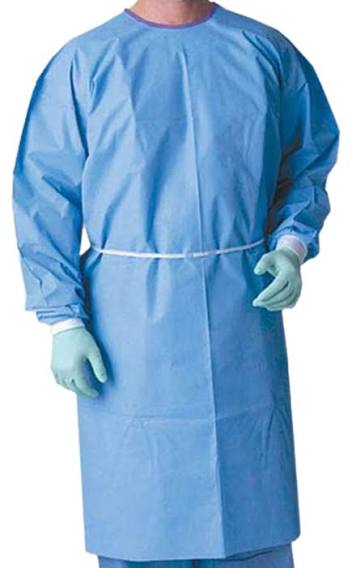
Surgical gowns are classified by the Association for the Advancement of Medical Instrumentation (AAMI) into four levels of liquid barrier protection. Choosing the right level isn't about picking the highest number by default — it's about matching protection to actual fluid exposure risk.
Level 1 — Minimal Risk
Used for basic care, standard isolation, and procedures with minimal or no fluid exposure, such as a general medical unit or cover gown for visitors.
Level 2 — Low Risk
Suited to minor procedures with some fluid exposure, including basic lab work, drawing blood, or suturing in a low-intensity setting.
Level 3 — Moderate Risk
Designed for procedures with a higher volume of fluid exposure and a longer duration, such as arterial blood draws, inserting an IV line, or emergency room trauma care.
Level 4 — High Risk
The highest barrier rating, tested to be impervious to bacteria and viruses for extended fluid contact. Required for long, fluid-intensive surgical procedures and known infectious cases.
Choosing the Right Gown
Match the level to the procedure's expected fluid exposure, not just its length.
Check whether the setting requires sterile or non-sterile gowns — the two are not interchangeable.
Reinforced sleeves and chest panels add extra protection for Level 3 and 4 use without needing a full step up in rating.
Stocking the correct mix of levels for your department reduces waste from over-ordering high-protection gowns for low-risk tasks, while keeping your team properly protected where it matters most.